CJC-1295 DAC and No-DAC have very different clearing times
DAC is the addition that lets the long form join albumin, a blood protein. Here you'll learn why findings from one form can't be assumed for the other.
The added DAC piece lets albumin slow the compound's exit
CJC-1295 has a form with DAC and a form without DAC. This page explains the bond that makes their clearing times differ.
Both forms copy a natural hormone and contain four changes against breakdown. The DAC piece creates the long form's bond with albumin in blood [2].
Albumin normally helps keep water within blood vessels. The compound joins this slowly clearing protein and remains in blood longer.
Adults needed an estimated 5.8 to 8.1 days to clear half the joined compound [1]. Repeated shots kept IGF-1, the liver's growth protein, raised up to 28 days.
The short form clears in minutes to hours. Labels and online accounts sometimes use CJC-1295 for either form.
Sharing a name doesn't mean the forms act for the same time. You also can't judge health benefits just from the length of that stay.
CJC-1295 DAC joins albumin rather than clearing alone
DAC allows albumin in blood to form a bond with the peptide [1][2]. Albumin normally keeps water within blood vessels.
The joined peptide stays longer because albumin clears slowly. Adults needed days to clear half the compound; that duration doesn't tell you an amount to take.
CJC-1295 DAC gave rats more hormone across the test
Rats received CJC-1295 DAC or a form without the albumin bond [2]. Researchers estimated total growth hormone by adding repeated blood readings.
The total was 4-fold, or four times greater with the bond. Higher readings count more; high readings lasting longer count more again.
The compound remained detectable beyond 72 hours. Rat results don't establish your health benefit.
The albumin bond and slow breakdown guided the choice in rat tests
Scientists tested several forms before choosing CJC-1295 [2]. This form combined four changes against breakdown with a bond to albumin.
Researchers estimated total growth hormone by adding readings taken over two hours. Higher readings add more to the total; continued high readings add more again.
The rat total was 4-fold, meaning four times the total without the bond. The compound remained detectable beyond 72 hours and resisted breakdown in lab tests.
The peptide joined to albumin weighs about 66 kilodaltons, units scientists use for tiny weights. That larger joined pair clears slowly; the weight doesn't describe a shot amount or prove a human benefit.
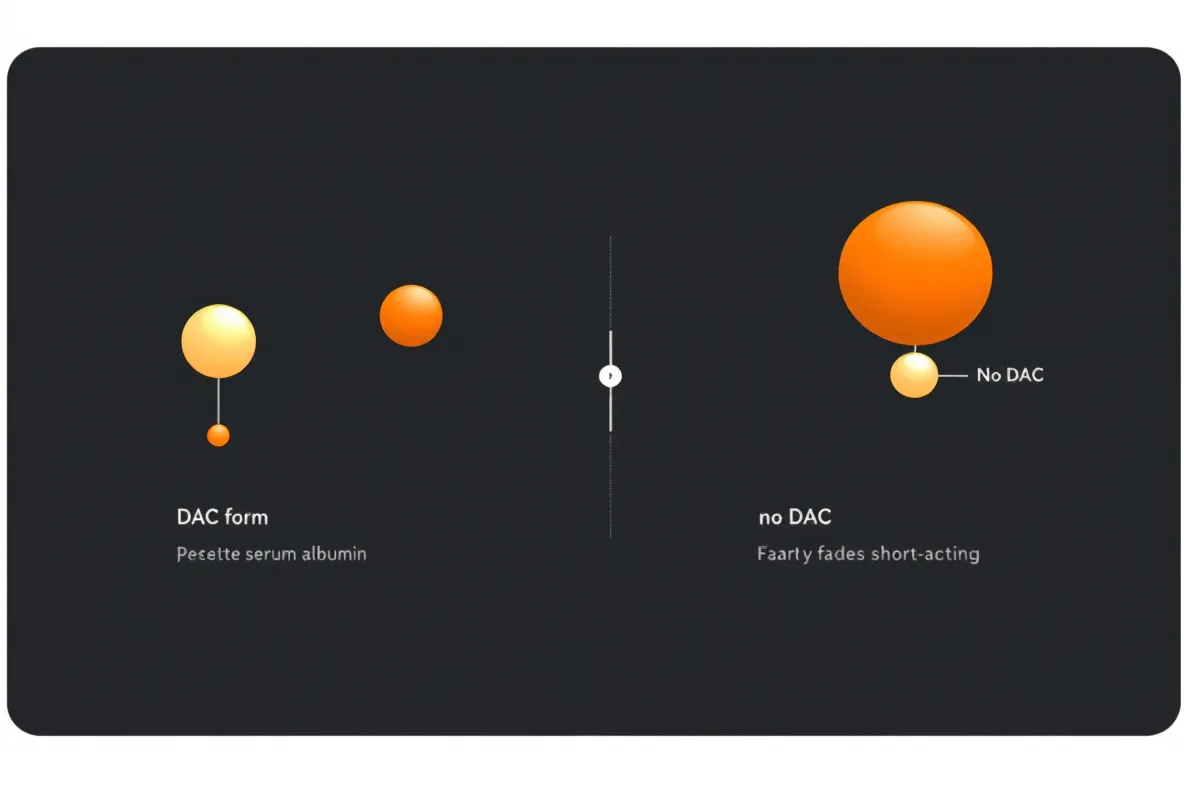
Modified GRF (1-29) is the form without the albumin bond
Modified GRF names the short form that has no DAC piece. Its full name refers to the natural hormone's first twenty-nine amino acids, the small chemicals that form proteins.
Four changed parts help this short form resist breakdown. Those changes don't create a bond with albumin.
The short form clears in minutes to hours. Sellers sometimes use the name CJC-1295 for this form too [2].
A label can therefore hide a large difference in duration. You need the form's identity to judge whether a study applies.
Only the form joined to albumin has the bond giving days of action. Calling the short form by the same name doesn't add that bond.
Findings lasting days came from adult tests of the long form
The long form raised growth hormone between the gland's usual bursts. IGF-1, the liver's growth protein, rose about 45% a week later [3].
Another adult test found average growth hormone 2- to 10-fold higher [1]. Readings doubled or rose as high as ten times their starting level and stayed raised beyond six days.
Albumin carried the tested form through blood for days. You can't apply that duration to the short form without the bond.
The IGF-1 rise continuing into days nine through eleven concerns long-acting CJC-1295. Continued normal hormone bursts also came from testing that form [3].
A burst means the gland briefly releases more hormone into blood. Less release between bursts describes gland activity, rather than whether someone was asleep.
Modified GRF is the short form, whatever name appears on a bottle. The short form leaves blood sooner because albumin doesn't carry the compound.
Your CJC-1295 comparison needs the form's identity as well as the finding. The long form's blood results can't fill the short form's missing health tests.
The long form's development stopped before drug approval
ConjuChem stopped development of long-acting CJC-1295 before the compound became an approved medicine. Development had reached Phase 2, early patient testing of possible benefits and harm.
The patients had HIV and excess fat deep inside the belly. HIV infection leaves the body less able to fight germs.
Reports described one patient's death during development. Public reports have not clearly established the medical cause or proved the compound caused that death.
You can't use an unresolved report to decide that the compound caused a death, but the lack of a proved cause also cannot establish that continued use would be safe for other people. No form is approved anywhere to treat people.
Both forms lack large studies of health benefits and lasting safety. This CJC-1295 history leaves benefits and harm from continued use unsettled.